
Starting a business in the Philippines is often imagined as a moment driven by passion, creativity, or opportunity. But for many entrepreneurs, the real beginning happens much later—when a business transitions from an idea into a formal responsibility shaped by compliance, systems, and long-term operational demands.
For first-time founders, the challenge is rarely limited to launching a product or making an initial sale. The more difficult transition begins when entrepreneurs decide to formalize their operations and enter a system that requires structure, reporting, and consistency.
This is where many small businesses begin to encounter the realities of entrepreneurship beyond the excitement of starting up.
The Difference Between an Idea and a Registered Business
Many aspiring entrepreneurs assume that registering a business is a straightforward, one-time process. In practice, it involves multiple stages that require coordination across different agencies and local government units.
Business owners must secure a business name through the Department of Trade and Industry (DTI) or the Securities and Exchange Commission (SEC), depending on the structure of the enterprise. This is followed by barangay clearances, city permits, and Bureau of Internal Revenue (BIR) registration requirements.
Each step introduces additional responsibilities, including:
- issuance of official receipts or invoices
- bookkeeping and records management
- tax filing obligations
- annual permit renewals
- compliance monitoring
Individually, these requirements may appear manageable. Together, however, they form a system that many first-time founders underestimate.
The challenge is not simply the paperwork itself, but the shift in mindset required to operate within a formal business environment.
A registered enterprise is no longer an informal side activity. It becomes an entity expected to comply with deadlines, maintain documentation, and operate within legal and financial frameworks regardless of business performance.
Why Early-Stage Businesses Struggle
Many SMEs prepare enough capital to launch but fail to fully anticipate the financial realities of sustaining operations.
Founders often budget for:
- inventory
- equipment
- initial marketing
- rental deposits
- business setup costs
What is frequently overlooked is the need for operating capital during the unstable early months of the business.
Rent continues whether sales are strong or weak. Inventory must be replenished. Utilities, salaries, taxes, and compliance expenses continue even during slow periods.
This creates one of the most common operational pressures for SMEs: cash flow management.
For many businesses, profitability is not the immediate issue. Survival depends on maintaining enough working capital to sustain operations while customer demand stabilizes.
This is why many early-stage enterprises struggle not because of weak ideas, but because execution becomes fragmented under operational pressure.
The Operational Reality Behind Entrepreneurship
As businesses grow, entrepreneurs quickly realize that operations involve more than selling products or services.
Founders are simultaneously expected to manage:
- customer acquisition
- supplier coordination
- compliance deadlines
- documentation
- accounting
- staffing
- inventory management
- business development
Without systems in place, these responsibilities can overwhelm small teams or solo entrepreneurs.
Some business owners delay formal registration after encountering regulatory complexity. Others successfully register but later struggle to keep pace with recurring obligations. In some cases, entrepreneurs move too quickly without validating market demand, only to discover that customer traction is weaker than expected.
These realities reflect a broader challenge within the Philippine SME ecosystem: the gap between starting a business and sustaining one.
The Shift From Informal Effort to Structured Enterprise
Despite the difficulties, formalization remains a critical step toward long-term business growth.
A registered business gains:
- greater credibility
- access to partnerships
- opportunities for financing
- participation in formal supply chains
- eligibility for expansion programs and government support
More importantly, structure allows businesses to scale sustainably.
This is why entrepreneurship requires more than ambition alone. It demands operational discipline, adaptability, and the willingness to build systems that support long-term growth.
For Filipino entrepreneurs, the challenge is not simply to launch a business, but to remain resilient through changing market conditions, rising operational costs, and evolving compliance requirements.
At the same time, the conversation also extends beyond entrepreneurs themselves. Government agencies, private sector organizations, and business ecosystems continue facing the broader responsibility of simplifying processes, improving accessibility, and helping more Filipinos transition from informal income generation into sustainable enterprise-building.
Why This Conversation Matters for Philippine SMEs
The Philippine economy continues to rely heavily on SMEs as drivers of employment, innovation, and local economic activity. Yet many small businesses continue operating in environments shaped by limited resources, operational uncertainty, and administrative friction.
Understanding the realities behind formal entrepreneurship helps founders prepare more strategically—not only for launching, but for sustaining growth over time.
Starting a business, in this sense, is not a single event.
It is a long-term commitment to building systems, adapting to challenges, and operating with clarity despite uncertainty.
For many entrepreneurs, that is where business truly begins.
Originally Published in PHILSME Business Magazine
This article was originally published in the PHILSME Business Magazine, a publication focused on business insights, entrepreneurship, market trends, and issues shaping the Philippine SME ecosystem. The magazine is distributed to entrepreneurs, business leaders, exhibitors, and decision-makers through PHILSME events and partner networks nationwide.
About PHILSME
PHILSME is a national business platform designed to connect Filipino entrepreneurs with solutions, partnerships, and opportunities that drive sustainable growth—locally and globally.
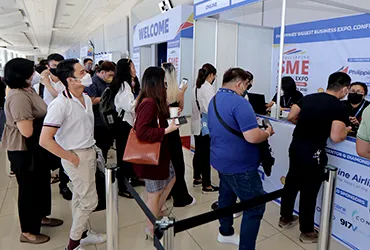
The 18th PHILSME Business Expo & Conference will be held on May 22–23, 2026 at the SMX Convention Center Manila.