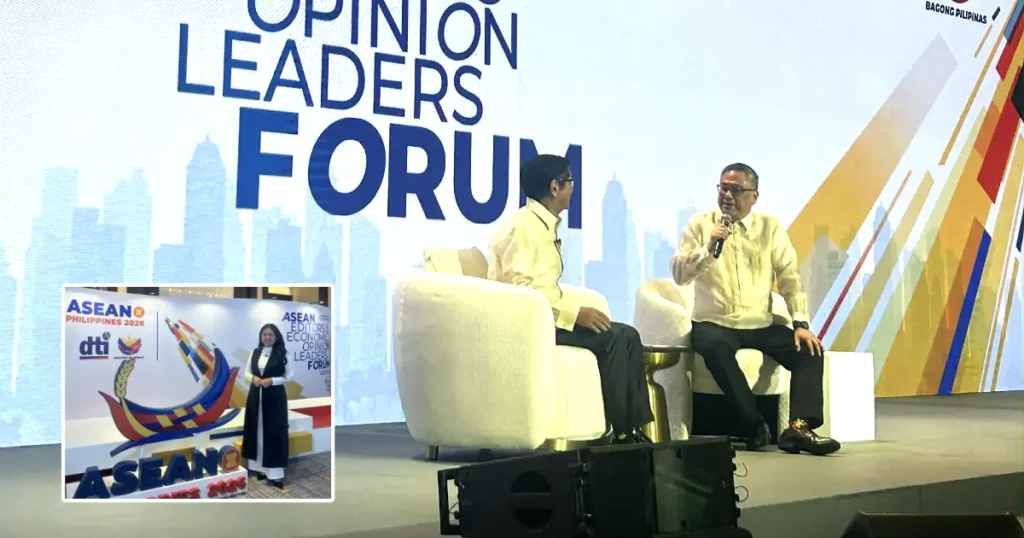
Makati City, Philippines — The ASEAN Editors and Economic Opinion Leaders Forum held on February 24, 2026 at Fairmont Hotel Makati convened regional editors, economic analysts, and policymakers for a fireside dialogue titled “Tapping the Philippines’ Dynamic Growth Story.”
In conversation with ABS-CBN News Channel host Rico Hizon, Philippine President Ferdinand Marcos Jr. discussed structural economic reforms, ease of doing business, digitalization, foreign direct investment (FDI), and ASEAN economic integration.
For Filipino SMEs, several clear economic signals emerged from the discussion.
Structural Reform: Changing How Government Works
The President described ongoing “serious structural changes in the way that we do business,” particularly within government systems.
He likened bureaucracy to “one of these very large tankers where you turn the wheel and it takes… 10 kilometers for it to actually start moving,” emphasizing the difficulty of accelerating reforms.
For SMEs, structural reform directly affects business registration, permit processing, contracting with government, and regulatory compliance.
The President acknowledged that bureaucratic delays and multiple layers of checks have slowed processes and expressed the need for faster response when policy direction changes.
Stability, Resilience, and Agility in a Volatile World
Amid geopolitical and economic volatility, the President emphasized the need to provide “stability,” while also ensuring the country remains “agile” and “resilient” against shocks.
He cited global geopolitical upheavals, climate change disruptions, supply chain shocks, and the impacts of global conflicts on food and fuel prices.
For businesses, the administration’s objective is to build robustness so the economy can adjust regardless of external disruptions.
Stability, he said, is central to investor confidence. Investors seek “stability and vision,” along with a clear roadmap on where the Philippines intends to direct public expenditure and growth priorities.
Expanding Beyond Traditional Trade Partners
A major theme was diversifying trade and investment relationships.
The President noted the need to engage “non-traditional suppliers” and “non-traditional investors” — partners historically less engaged with the Philippines.
He referenced stronger engagement with the European Union, bilateral efforts with EU member states, opportunities in Latin America, and strengthened ties with Canada and France.
Broadening economic partnerships, he explained, reduces vulnerability to external shocks and strengthens long-term resilience.
For SMEs, expanded trade relationships may create new supply chain linkages and market access opportunities as the Philippines diversifies its global footprint.
Ease of Doing Business and Digitalization
Ease of doing business was directly addressed during the exchange.
The President acknowledged concerns about the number of signatures and procedural requirements involved in business registration and permits.
He pointed to excessive documentation requirements, multiple office visits, manual systems, and the presence of “fixers” exploiting bureaucratic delays.
Digitalization was identified as a key solution.
He cited the eGov app allowing online interaction with agencies, digital IDs now covering approximately 70 percent of personal IDs, and plans to minimize person-to-person contact in government transactions.
Digitalization aims to reduce discretion, shorten processing time, minimize corruption risks, and improve efficiency for citizens and investors.
For SMEs, this direction signals continued focus on simplifying compliance and reducing operational friction.
Private Sector as a Full Partner
The President emphasized that from the first day of his administration, the private sector was recognized as a “full and important partner in economic development.”
He described the Private Sector Advisory Council (PSAC) as a regular platform where government and business leaders meet to identify needed reforms, evaluate progress, and improve implementation.
The approach, he said, is not about assigning blame but about refining what works and correcting what does not.
For SMEs, institutionalized engagement between government and business reinforces the importance of structured dialogue in shaping policy outcomes.
ASEAN: Strengthening Intra-Regional Trade
As ASEAN Chair in 2026, the Philippines’ focus includes strengthening intra-ASEAN trade and supply chains.
The President cited that approximately 23 percent of ASEAN trade is intra-regional, with the remaining 77 percent conducted outside the bloc.
He expressed the goal of strengthening supply chains within ASEAN, standardizing procedures, coordinating agencies, and working toward a common ASEAN grid.
The shared aspiration, he said, is for ASEAN to return to its role as a global economic driver.
Bridging Regional Direction and SME Readiness
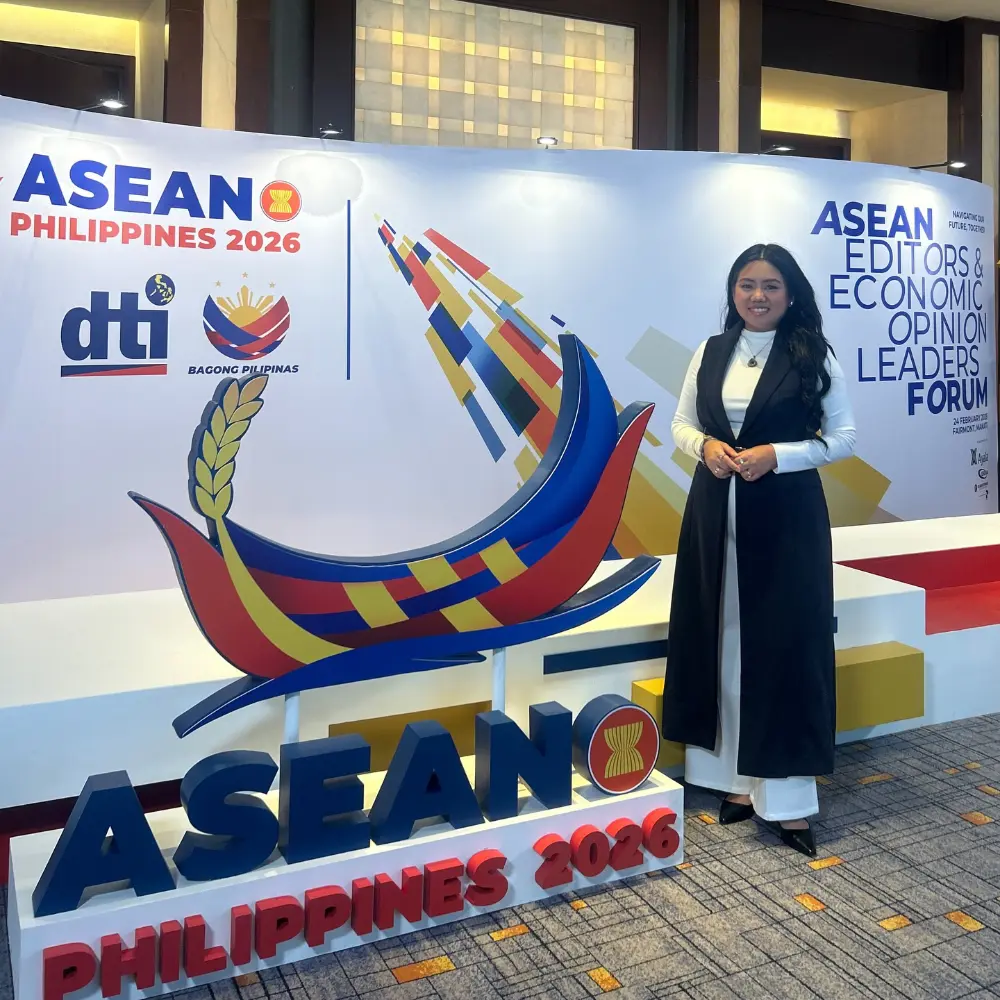
PHILSME CEO and Managing Director Trixie Esguerra-Abrenilla attended the forum as part of the organization’s commitment to staying aligned with national and regional economic developments.
The fireside chat underscored themes directly relevant to Filipino SMEs: structural reform of government systems, digitalization of services, stability amid volatility, diversified trade engagement, private sector partnership, and stronger ASEAN economic integration.
As PHILSME prepares for its 18th Philippine SME Business Expo & Conference, the forum’s discussions reinforce the importance of readiness, compliance, and adaptability for enterprises operating within an evolving regional economic landscape.
About PHILSME
PHILSME is a national business platform designed to connect Filipino entrepreneurs with solutions, partnerships, and opportunities that drive sustainable growth—locally and globally.
The 18th PHILSME Business Expo & Conference will be held on May 22–23, 2026 at the SMX Convention Center Manila.